



Africa: Strengthening Christians
Africa has millions of Christians, but there is a great shortage of Bibles. Many believers do not have their own copy to read or share. Together with local churches, City Bibles provides Bibles, New Testaments, and evangelistic materials so that Christians can grow spiritually and reach others.
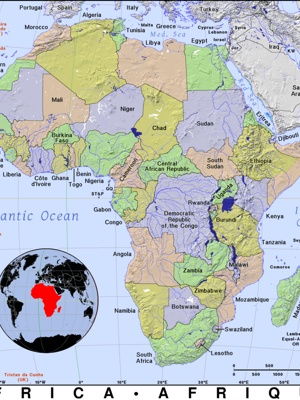
DR Congo
- Has one of the largest Bible shortages in the world
- Evangelism among street children
- More than 60% of the population is under 25 years old
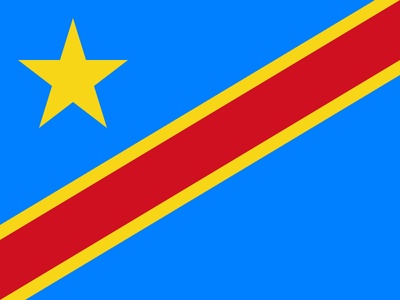
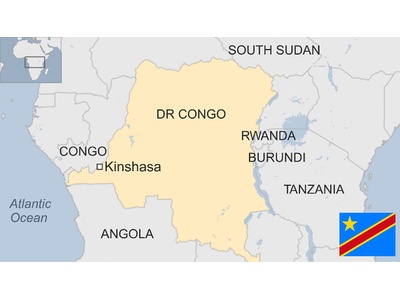
General Information about the Democratic Republic of Congo (DRC)
The Democratic Republic of Congo (DRC) is the second-largest country in Africa and one of the most resource-rich nations in the world. It has approximately 111 million inhabitants and borders nine countries: Uganda, Rwanda, Burundi, Tanzania, Zambia, Angola, the Republic of Congo, South Sudan and the Central African Republic. The capital city is Kinshasa. When it is 12:00 noon in the Netherlands (summer time), it is 11:00 AM in the DRC (UTC +1).
History
The DRC was once a colony of Belgium, first as the notorious Congo Free State under King Leopold II, and later as Belgian Congo. The country gained independence on 30 June 1960. Since independence, the DRC has faced political instability, conflict and humanitarian crises, partly due to struggles over valuable resources such as cobalt and copper.
Religion
About 95% of the population is Christian, including Catholics, Protestants and Pentecostals. There are also Muslim communities and traditional African religions. Christians form a clear majority, but churches often operate under difficult conditions due to poverty and ongoing instability.
Nature and Geography
- The DRC is exceptionally rich in natural resources such as cobalt, copper, gold and diamonds.
- The Congo River is the second-largest river in the world in terms of water volume.
Politics and Society
- Semi-presidential republic, led by a president and a government.
- The population faces poverty, conflict, limited infrastructure and humanitarian challenges.
- Despite its immense natural wealth, the DRC remains one of the poorest countries in the world.
Languages
The official language is French. The national languages are Lingala, Swahili, Kikongo and Tshiluba, each spoken by millions in different regions. City Bibles provides Bibles in French and in these regional languages.
City Bibles Project in the DRC
- The DRC has more than 40 million smartphone users. By combining printed Bibles with QR keychains that provide access to our Bible App, we can reach people in both cities and remote areas.
- Since 95% of the population is Christian but Bibles are scarce and expensive, the need for affordable Bibles and digital access is enormous.
Oeganda
- Enormous demand for Bibles
- With just €6 we can print and distribute one Bible
- 85% of the population is Christian
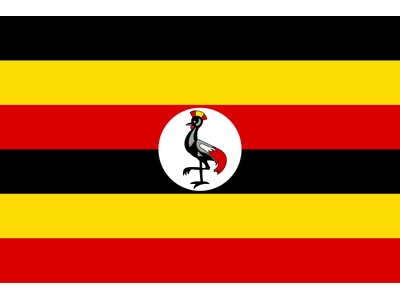
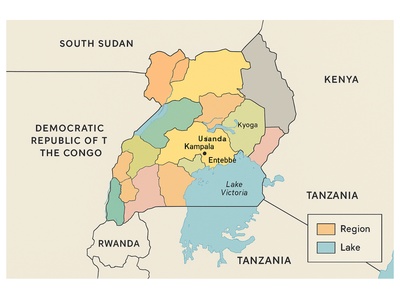
General Information about Uganda
Uganda, also known as the “Pearl of Africa”, is located in East Africa and has approximately 48 million inhabitants. It borders the Democratic Republic of Congo, Rwanda, South Sudan, Tanzania and Kenya. The capital city is Kampala. When it is 12:00 noon in the Netherlands (summer time), it is 1:00 PM in Uganda (UTC +3).
History
Uganda became independent from the United Kingdom on 9 October 1962. In the 1970s, the country came under the harsh rule of dictator Idi Amin. Since 1986, Uganda has been led by President Yoweri Museveni. Despite periods of conflict, the country has experienced relatively stable development in recent decades.
Religion
About 85% of the population is Christian (Catholic, Anglican and Pentecostal). Around 12% is Muslim. There are also traditional African religions and small Hindu, Bahá’í and Jewish communities. Christianity plays an important role in society and culture.
Nature and Geography
- Uganda lies largely on a high plateau with an average elevation of about 1100 meters.
- Lake Victoria is the largest lake in the country and one of the largest in Africa.
- The landscape is diverse, with savannas, lake regions and mountain areas.
Politics and Society
- Presidential republic, led by President Yoweri Museveni.
- Uganda has a very young population: more than 75% is under the age of 30.
- The economy is driven mainly by agriculture, supplemented by services and light industry.
Languages
The official languages are English and Swahili. The most widely spoken local language is Luganda, especially in and around Kampala. In total, more than 40 local languages are spoken. City Bibles provides Bibles in English, Swahili and Luganda.
City Bibles Project in Uganda
- Uganda has a rapidly growing digital culture. By combining printed Bibles with QR keychains that provide direct access to our Bible App, we can reach both urban and rural communities.
- Many local churches have a strong need for affordable Bibles in accessible languages such as Luganda, English and Swahili.
Kenia
- High need for Bibles
- Many young people
- High smartphone penetration makes QR keychains very effective
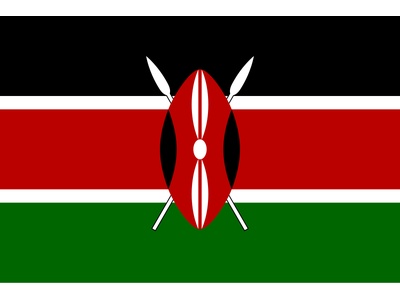
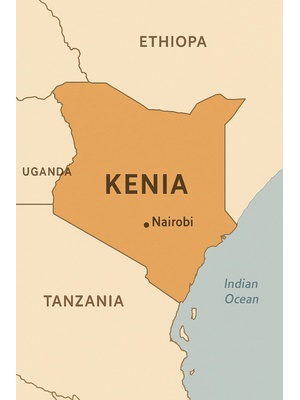
Kenya
- Capital: Nairobi
- Population: ~56 million
- Official languages: English, Swahili
General Information about Kenya
Kenya is located in East Africa and has approximately 56 million inhabitants. It borders Uganda, Tanzania, Ethiopia, Somalia and South Sudan, and has a coastline along the Indian Ocean. The capital city is Nairobi. When it is 12:00 noon in the Netherlands (summer time), it is 1:00 PM in Kenya (UTC +3).
History
Kenya became independent from the United Kingdom on 12 December 1963. Jomo Kenyatta became the first president and is regarded as the founding father of the modern Kenyan state. Since independence, Kenya has developed into an important business, technology and political hub in East Africa.
Religion
About 85% of the population is Christian (mainly Protestant and Catholic). Around 11% is Muslim, primarily in coastal areas and the northeast. There are also traditional African religions and smaller Hindu and Sikh communities. Religion plays a major role in social structures and community life.
Nature and Geography
- Kenya has a highly diverse landscape, ranging from savannahs to mountains and coastal regions.
- The Great Rift Valley runs through the entire country and shapes much of its geography.
- The nation is famous for its wildlife and national parks, such as Maasai Mara and Amboseli.
Politics and Society
- Presidential republic with Nairobi as its economic and political centre.
- Kenya has one of the most diverse economies in Africa, built on agriculture, services, trade, technology and tourism.
- The population is young and multicultural, with more than 40 ethnic groups.
Languages
The official languages are English and Swahili. Dozens of local languages are spoken as well, including Kikuyu, Luo, Luhya, Kamba and Maasai. City Bibles provides Bibles in English and Swahili and is digitally expanding into several local languages.
City Bibles Project in Kenya
- Kenya has a large and growing digital community. With our hybrid approach — printed Bibles combined with QR keychains that give access to our Bible App — we can reach both urban and rural areas.
- Local churches have a strong need for affordable Bibles and digital Bible access for younger generations who speak English, Swahili or local languages.